When asked if they feel comfortable speaking their minds on political issues, just 51 percent of young voters say they do always or most of the time according to the latest nationwide survey conducted by Echelon Insights for Young America’s Foundation (YAF). Nearly one-quarter (23 percent) of this rising generation, sadly, say they rarely or never do.
Compared to YAF’s previous survey conducted in January, young conservatives are now less likely to feel comfortable expressing their views, sliding from 65 percent who were comfortable at the start of the year to just 51 percent this fall.
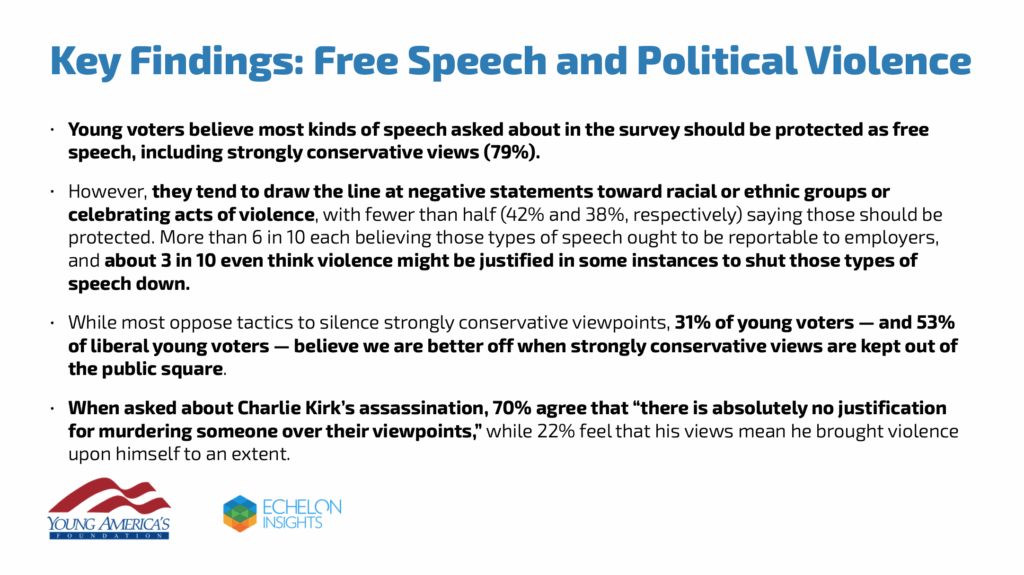
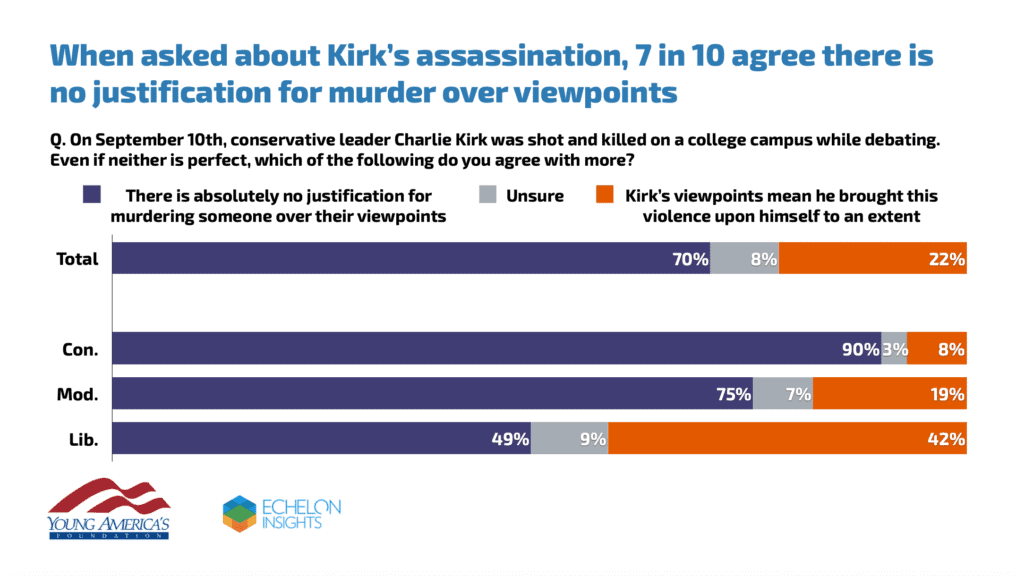
Surveyed shortly after the assassination of Charlie Kirk this fall, 70 percent of young voters say that there is absolutely no justification for murdering someone over their viewpoints. When broken out along ideological lines, an alarming 42 percent of young liberal voters, however, say that Kirk’s viewpoints mean he brought violence upon himself to an extent.
Looking more closely at which viewpoints young voters think should be protected as free speech, 79 percent believe voicing a strongly conservative viewpoint should be protected, but more specific examples of expression saw the amount of support wane. Twelve percent of young voters think voicing a pro-Israel viewpoint should not be protected, 19 percent believe saying something that offends people should not be protected, and 23 percent say calling a person by their biological sex should not be protected speech.
Fewer than half of young voters think that negative statements toward racial or ethnic groups or celebrating acts of violence should be protected as free speech — 42 percent and 48 percent respectively — and roughly 60 percent believe such expression should be reportable to employers. Three-in-ten young voters, however, say violence might be justified in some instances to shut those types of speech down.
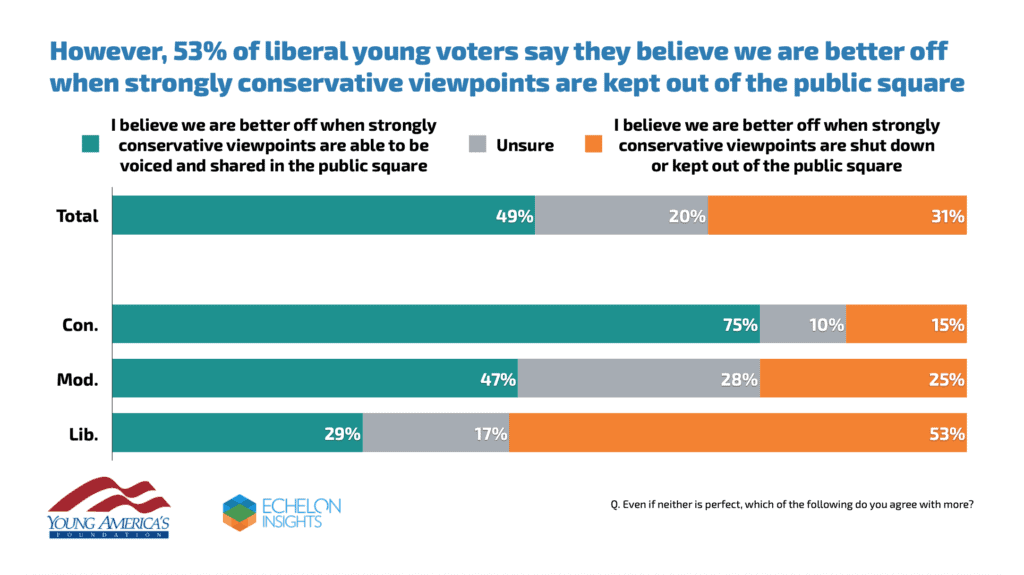
At a slightly higher level, when it comes to young voters’ opinion on including strongly conservative viewpoints in the marketplace of ideas, 31 percent believe things are better when such views are kept out of the public square, including 53 percent of young liberal voters.
It’s (Still) the Economy
YAF’s fall survey found that more young voters view their personal economic situation as worsening compared to our January survey. Again, the cost of living and jobs and the economy were the top two areas of concern for the rising generation, up 5 percent and 3 percent, respectively, since the beginning of the year.
Over the same period, the number of young voters who report they rarely or never feel proud of the United States ticked up to 38 percent while 25 percent sometimes feel proud of their country. Thirty-five percent say they are proud of America always or most of the time.

When asked which aspects of America they are least proud of, divisiveness and hate topped the list, along with violence and crime. Still, 62 percent of young voters are optimistic that it’s possible for Americans to come together and move past current divisions. Young conservatives and moderates are the most hopeful on this front, while 36 percent of young liberals believe America’s divisions are too deep to get beyond.
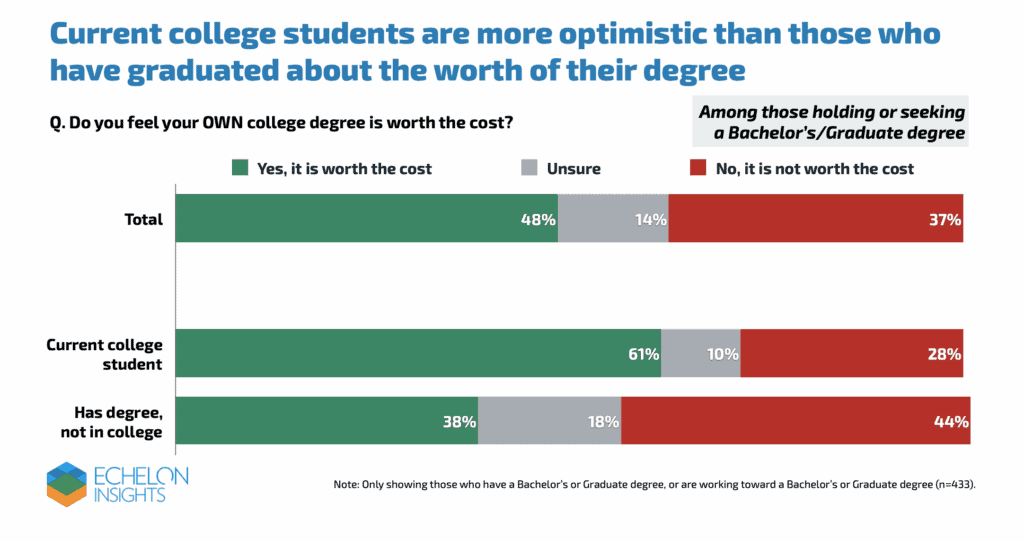
YAF’s latest survey also found that most young Americans don’t think a college degree gives them a better chance at financial wellbeing, with just 38 percent of degree holders saying their diploma was worth the cost — a notable drop from the 61 percent of current degree-seekers who think obtaining a degree will be worth it.
Fifty-nine percent of young voters believe that, even while they’re not yet where they want to be financially, they’re confident they’ll be able to get there while 31 percent say they are not confident they’ll reach their goals. Meanwhile, 51 percent of those surveyed believe there is not much opportunity in America today and the average person doesn’t have much chance to really get ahead.
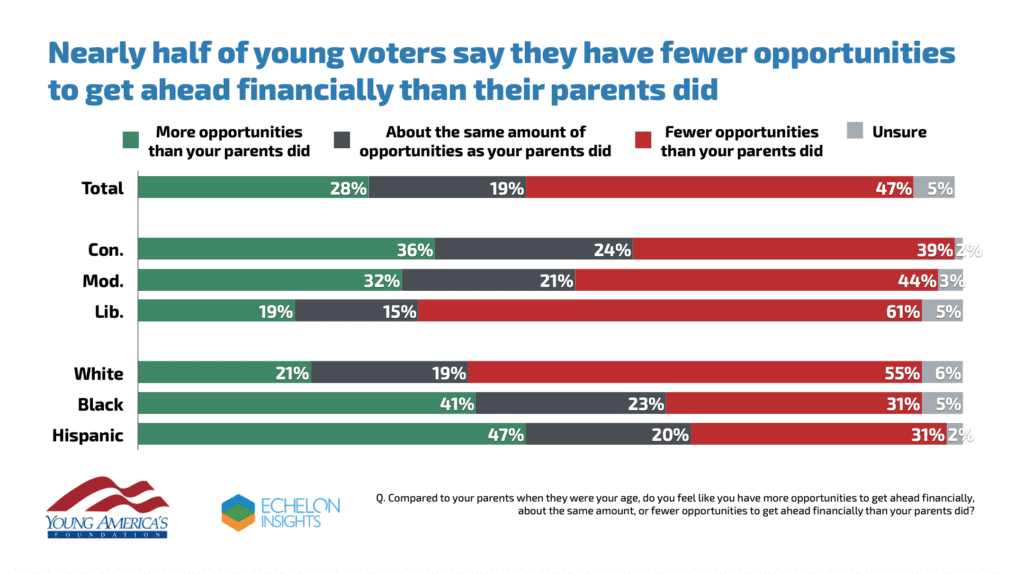
When asked to compare their opportunities to those their parents had, 47 percent believe they have fewer while 28 percent say they have more. Among young white voters, just 21 percent think they have more opportunities than their parents, compared with 41 percent of young black voters and 47 percent of young Hispanic voters.
Slightly more young voters say that America doesn’t value hard work the way it used to, with fewer people taking pride in their work (48 percent), than think the U.S. still values hard work (45 percent).
Looking Ahead
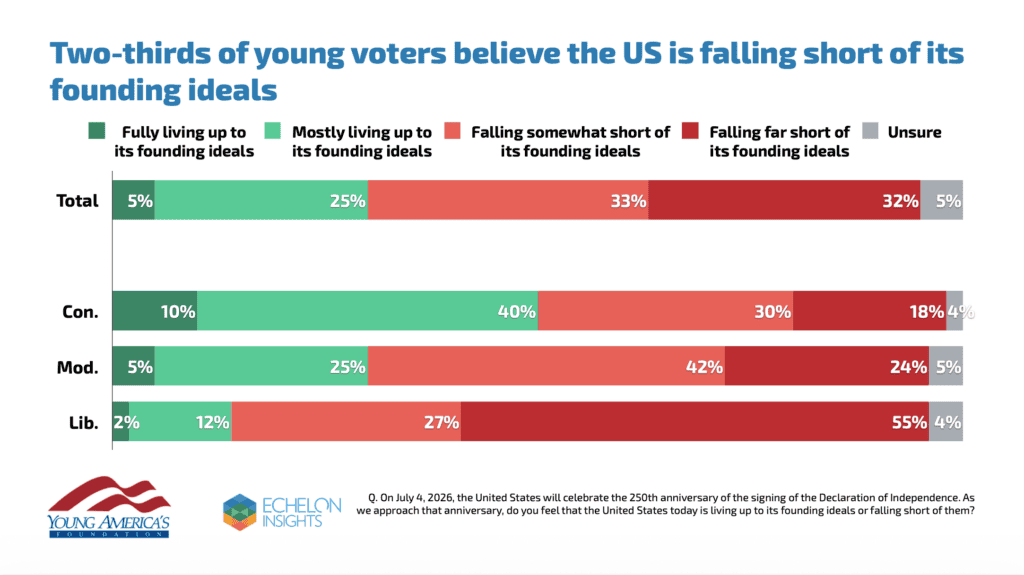
As the country prepares to commemorate the 250th anniversary of America’s founding, most young voters don’t believe America is living up to its founding ideals, with 55 percent of young liberals saying the U.S. is falling far short, joined by 24 percent of moderates and 18 percent of conservatives.
Also coming in 2026: midterm elections. Sixty-four percent of young conservatives and 68 percent of young liberals say they are extremely or very motivated to cast their ballots next November while just 39 percent of young moderates report the same.
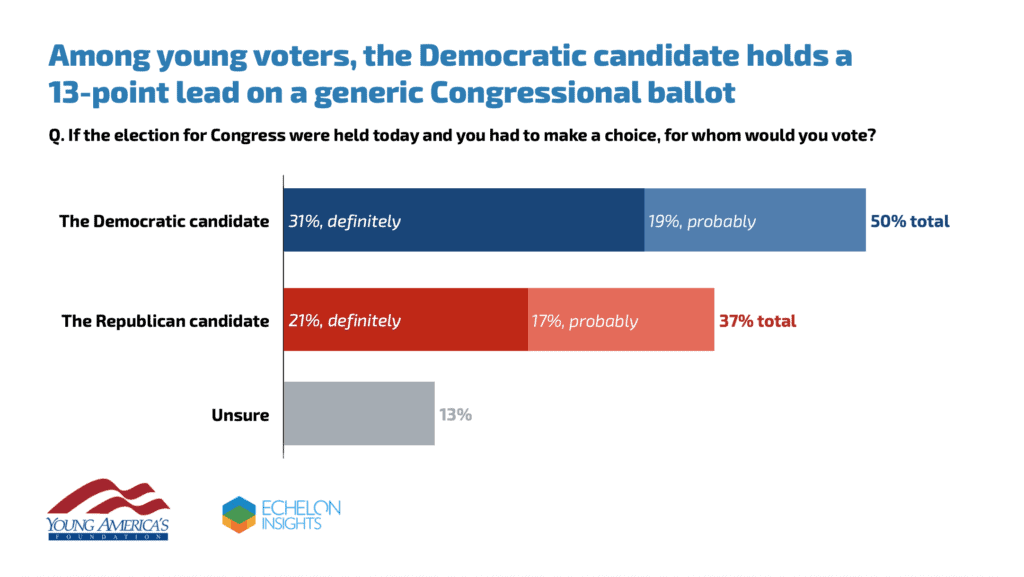
Among young voters, Democrats hold a 13-point lead on a generic congressional ballot, 50 percent to 37 percent with 13 percent remaining unsure.
Young America’s Foundation’s fall survey was conducted by Echelon Insights which surveyed 1,021 registered voters aged 18-29 nationwide. For additional information or to cover this survey contact [email protected].