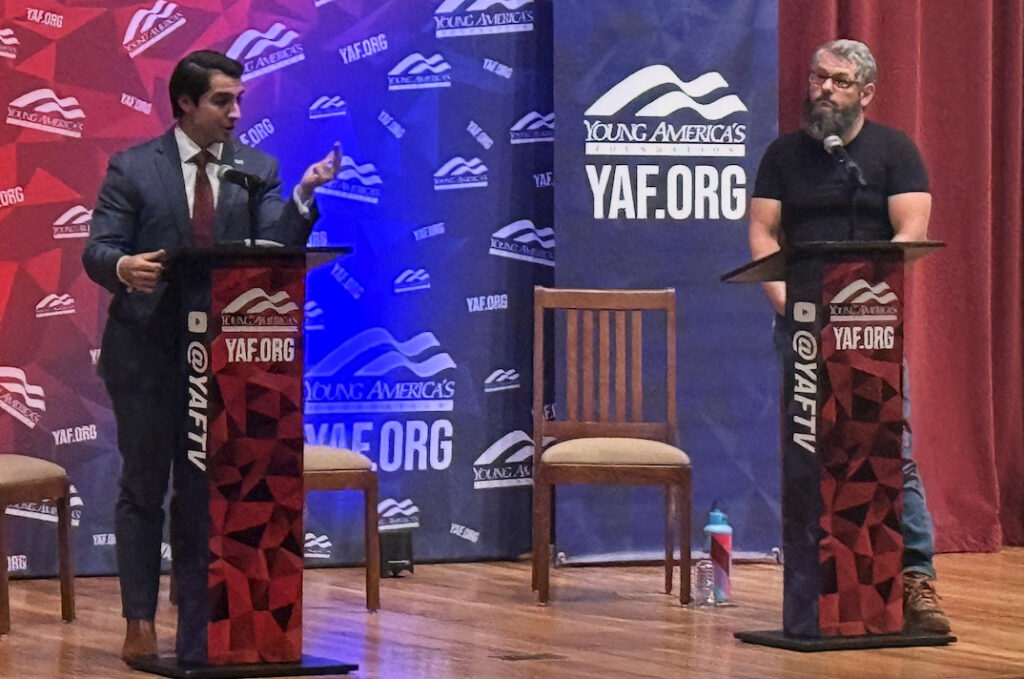
While speaking at Cornell University, Nick Freitas destroyed the liberal and progressive ideology that has long dominated college campuses across the country. Addressing the sexual misconduct controversy at the University, Freitas argued that the incident reflects a broader cultural problem fueled by progressive worldviews and institutions that have encouraged increasingly blurred boundaries around sexuality and relationships among young people.
Freitas made the argument while on campus urging students to reflect on their own morals, and think about where the progressive movement has led us to.
Hosted by the Cornell Republicans in partnership with Young America’s Foundation, Freitas addressed the controversy surrounding the alleged misconduct involving Cornell students, arguing that the broader cultural attitudes toward sex, morality and personal accountability deserve serious scrutiny.
Freitas said the events at Cornell should prompt a larger conversation about the consequences of abandoning traditional moral standards. He argued that for years he has warned about the dangers of an ideology that elevates individual freedom and personal expression above responsibility, discipline and objective standards of right and wrong.
Rather than encouraging young people to exercise sound judgment, he argued, modern progressive culture has increasingly dismissed the very principles that help guide their decisions.
Throughout his remarks, Freitas challenged the progressive notion that consent alone is sufficient to establish whether behavior is morally acceptable.
He argued that society has increasingly treated sex as something casual and inconsequential, despite recognizing that certain sexual behaviors carry serious moral consequences. Drawing on his own experience as a husband and father, he emphasized the importance of traditional sexual ethics, the institution of marriage and the responsibility men have to protect women and the innocent.
The event also included an audience Q&A, where Freitas fielded questions mainly about what it means to be a good man, and how we can learn from the events that happened at Cornell.