Seven years after a mob of left-wing protesters disrupted an event featuring economist Dr. Arthur Laffer at the State University of New York at Binghamton, the lawsuit brought by Young America’s Foundation against university security officials is heading to trial.
What began as another example of campus chaos has evolved into a major test of whether public universities can be held accountable when they allow disruptive protests to silence protected speech.
The events that gave rise to the lawsuit unfolded in November 2019 when YAF, in coordination with the Binghamton University College Republicans Chapter, hosted Dr. Laffer on campus to provide a lecture to students.
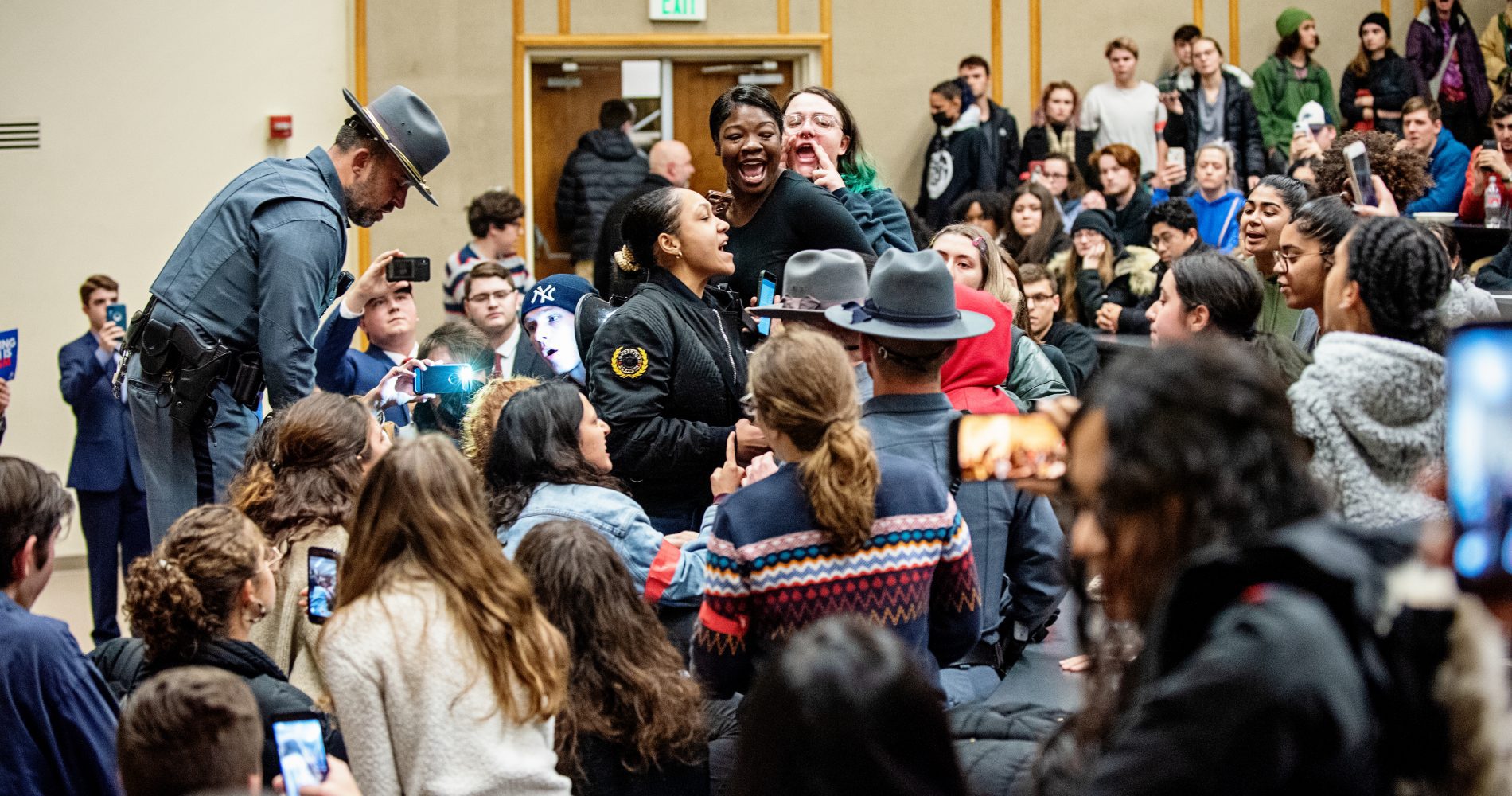
Instead of allowing students to hear from a distinguished economist and engage with his ideas, self-styled progressives disrupted the event, shouted over the speaker, the state university police allowed them to created an atmosphere that made it impossible for the program to continue as planned.
According to the lawsuit, the chief of the university police failed to take reasonable steps to protect the event despite anticipating significant disruptions. University police allegedly allowed the opinions of disruptive protesters to overwhelm the constitutional rights of everyone else in the room.
The First Amendment protects the right to protest. It does not protect the right to prevent others from speaking in a government forum.
A federal court previously rejected attempts by the university police chief to dismiss key portions of the lawsuit, allowing YAF’s constitutional claims to proceed. Now, after years of litigation, a jury will have the opportunity to determine whether the police chief, a public official, violated students’ First Amendment rights and whether he should be held legally accountable.
The trials outcome could send an important message to universities nationwide. If university security knowingly allow a hostile crowd to shut down protected speech, they may ultimately have to answer for those decisions in court.
Whether one agrees with Dr. Laffer’s economic views is entirely beside the point. The same constitutional protections that safeguard conservative speakers also protect progressive activists, civil rights advocates, labor organizers and countless others. The First Amendment is meaningful only if it applies equally to viewpoints that are popular and unpopular alike.
As this case finally heads to trial, it offers more than an opportunity to resolve one campus dispute. It offers a chance to reaffirm a principle that should never have been in doubt: at America’s public universities, disagreement must be answered with more speech: not with intimidation, disruption or administrative interference.